
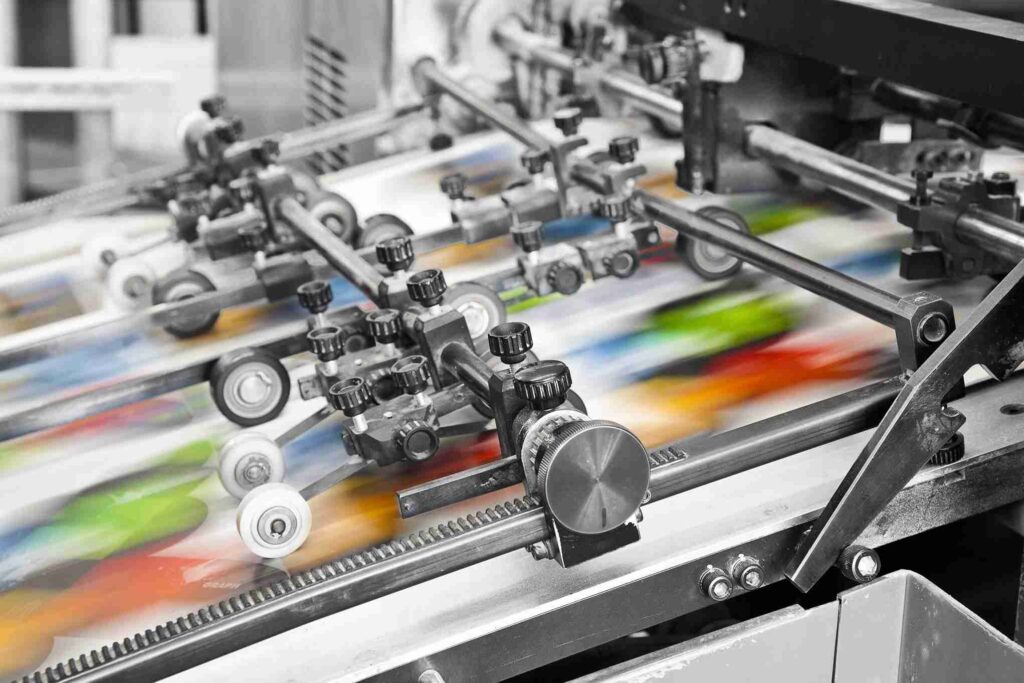
Inking, filtering, conditioning, and cleaning solutions for flexographic and gravure pressrooms
Graymills provides pressroom systems for flexographic and gravure printing applications that require reliable ink delivery, proper filtration, consistent conditioning, and fast turnaround. With the industry’s broadest range of centrifugal, peristaltic, and double diaphragm pumps—plus tanks, filters, mixers, accessories, and total systems—Graymills helps printers match the right solution to wide-web, mid-web, narrow web, envelope, corrugated, digital, coating, and related pressroom applications.
Graymills also supports the cleaning side of the pressroom. In addition to inking systems, Graymills offers pressroom cleaning solutions, including Inkitene cleaning fluid, ultrasonic benchtop parts washers for items such as filter cartridges and other ink-handling components, and spray parts washers such as the Tempest MHF and SWF family for flexible, powerful cleaning. For digital pressrooms, Graymills also offers PrintClean 554/654 Ink Pump & BID Washers for the HP Indigo, designed with assistance from HP Indigo experts.
That breadth helps make the process No Confusion. Graymills does not just offer a pump—it offers a total pressroom perspective across pumping, circulating, filtering, conditioning, and cleaning. It also means No Risk, with demo pumps and complimentary cleaning tests available to help prove the solution before purchase. And it means No Worries, because Graymills has worked with press builders, converters, ink makers, and hundreds of OEMs since 1939 to develop systems matched to real pressroom requirements.
Graymills can also support OEM customization, including custom and OEM tank configurations and systems developed to suit unique press, plumbing, and operating requirements.
Graymills is proud to support the printing industry through active involvement in FTA, GAA, and TLMI
What types of ink pumps are used in Flexographic and Gravure printing?
Flexo and Gravure printing commonly use three primary pump types:
- Centrifugal pumps. Centrifugal pumps are often the workhorse choice for continuous circulation and non-pulsating flow.
- Peristaltic pumps. Peristaltic pumps are a strong fit for controlled delivery, short runs, fast color changes, and applications where easy flushing matters.
- Double diaphragm pumps. Double diaphragm pumps are often used where viscosity, transfer duty, or application style make them a better fit.
The right choice depends on ink type, press configuration, deck height, flow requirements, and how the system is being used.
How do I choose the right ink pump for my press?
Choosing the right ink pump depends on ink viscosity, required flow rate, deck height, hose length, chamber design, press speed, and whether the system also needs filtration, mixing, or conditioning. In many pressrooms, flow problems are not caused by the pump alone. Hose size, fittings, chamber restrictions, and plumbing layout can all affect performance. The best results come from looking at the full ink-delivery system, not just the pump by itself.
Why do deck height, hose size, and fittings matter in ink system performance?
Deck height, hose size, fittings, and plumbing layout all affect how easily ink moves through the system. Even a properly selected pump can underperform if the system has too much restriction or is not laid out efficiently. Small hoses, long runs, restrictive fittings, and elevation changes can reduce flow, increase instability, and create problems at the chamber or print deck. Looking at the entire system helps ensure the press receives steady, reliable ink delivery.
How do I choose between a centrifugal, peristaltic, or diaphragm pump for Flexo and Gravure printing?
The right pump depends on ink viscosity, required flow, press configuration, hose length, deck height, and how the system will be used. Centrifugal pumps are often the best choice for continuous circulation and smooth, non-pulsating flow. Peristaltic pumps are a strong fit when controlled delivery, easy flushing, reversible flow, and fast color changes are important. Diaphragm pumps are often used for transfer duty or applications where ink viscosity or press setup makes them a practical choice. The best results come from matching the pump to the full ink-delivery system, not just the fluid alone.
Why is consistent ink circulation important in Flexo and Gravure printing?
Consistent ink circulation helps maintain stable viscosity, more uniform color, and more dependable print quality. Poor circulation can contribute to color variation, stagnation, contamination buildup, and inconsistent delivery to the print deck. Inks and coatings can separate in the container if they are not kept properly blended, especially in systems using diaphragm or peristaltic pumps without added mixing; this is especially true with high-solid inks, like scratch-off in lottery printing. Adding the right mixer can help maintain more consistent viscosity, color, and print quality over the course of the run.
What role does ink filtration play in the pressroom?
Ink filtration helps remove dried ink particles, metallic debris, blade material, ceramic chips, and other contaminants before they reach the print deck. That helps reduce print defects and can help protect anilox or gravure surfaces from damage. Inline filters, magnetic filtration options, and surge-suppressor filters can all play an important role in maintaining print quality and system stability.
How do surge suppressor filters improve diaphragm and peristaltic pump performance?
Surge suppressor filters help smooth pulsation that can occur with diaphragm and peristaltic pumps. By reducing flow variation, they help improve ink delivery stability, protect the system from pressure fluctuation, and support more consistent performance at the chamber or print deck. They can also provide filtration at the same time, helping remove contaminants before they create print defects or other pressroom problems.
Can Graymills systems handle inks, coatings, and varnishes?
Yes. Graymills systems can be configured for a wide range of inks, coatings, and varnishes used in Flexo and Gravure pressrooms. The right pump, tank, filter, and mixer combination depends on the fluid chemistry, viscosity, press layout, and performance requirements of the application. Proper system matching helps improve reliability, reduce waste, and maintain more consistent press performance.
What is the difference between wide-web and narrow-web ink systems?
Wide-web presses generally require higher flow rates and larger circulation capacity because they serve more print width and greater ink demand. Narrow-web and mid-web systems often place more emphasis on compact integration, tighter control, and fast cleanup. The right system depends on substrate width, ink demand, deck arrangement, color-change frequency, and the physical layout of the pressroom.
How do ink systems reduce press downtime?
A well-designed ink system helps reduce downtime by maintaining steady ink delivery, minimizing contamination, improving flow consistency, and making cleanup and color changes easier. Better system design can also reduce troubleshooting caused by restricted fittings, undersized hoses, poor tank circulation, or inconsistent flow to the chamber. In short, the right ink system helps the press run more predictably and with less interruption.
Can Graymills provide a complete ink handling system?
Yes. Graymills can provide complete ink handling systems that include pumps, tanks, filters, mixers, conditioning components, and related accessories. That allows printers and OEMs to build a more coordinated system instead of piecing together components one at a time. A more integrated approach can improve compatibility, reduce setup issues, and make the overall system easier to manage.
How do diaphragm pumps compare to centrifugal pumps in Flexo and Gravure applications?
Centrifugal pumps are commonly used when continuous, non-pulsating circulation is important. Double diaphragm pumps are often selected for certain transfer duties or for applications such as corrugated bottom printers, but their pulsating flow means surge suppression is often important. Peristaltic pumps offer another option when reversible flow, easy flushing, variable speed, and fast changeover are priorities. The best choice depends on ink behavior, press layout, and how the pump will be used in the overall system.
Does Graymills support the Flexo and Gravure industries?
Yes. Graymills supports Flexo and Gravure pressrooms with pumps, tanks, filters, mixers, conditioning systems, cleaning equipment, and OEM-oriented system support. The product range is built around real pressroom needs such as consistent flow, viscosity handling, contamination control, fast cleanup, and system fit by application.
What problems can an improperly sized ink pump cause?
An improperly sized ink pump can lead to weak flow, starved chambers, unstable color, poor circulation, excessive shear, pulsation-related issues, and unnecessary maintenance. In some cases, the problem may look like a pump issue when the real restriction is in the plumbing, fittings, hose size, or chamber inlet. Proper sizing means looking at the whole system so the press gets the flow it actually needs.
Can Graymills customize ink systems?
Yes. Graymills can customize ink systems based on flow needs, pressure requirements, ink chemistry, tank size, filtration level, mixing needs, press configuration, and automation requirements. Customization can help standardize performance across multiple presses, improve fit on difficult layouts, and support more consistent results from one job or facility to the next.
Can Graymills support OEM press builders as well as converters and printers?
Yes. Graymills supports OEM press builders, converters, and printers with pumps, tanks, filters, mixers, conditioning systems, and related components for Flexo and Gravure applications. This allows Graymills to support both new equipment integration and existing pressroom upgrades. Whether the need is a single pump, a complete ink-handling system, or a more customized solution, Graymills can help match the equipment to the press, fluid, and workflow